Industry insights
How to reduce Airbnb commission fees: a UK holiday let host's guide
·
By Amanda Sanders
If you list your holiday let on Airbnb or Booking.com, you already know that commission fees eat into your earnings on every single booking. What you might not know is just how much they add up over a year, or how straightforward it is to start reducing them. This guide breaks down exactly what the major booking platforms charge UK hosts, what direct bookings actually cost to set up, and how you can build a strategy that keeps more of your revenue where it belongs.
What the major platforms actually charge UK hosts
Before you can reduce your commission costs, it helps to know what you are currently paying.
Airbnb now charges UK hosts a flat fee of 15.5% on every booking. This is deducted directly from your payout and covers the platform's service charge. Airbnb has been rolling out this standardised host-only fee across 2025 and 2026, replacing the older split-fee model where hosts paid just 3% but guests were charged an additional 14-16% on top. The total platform take is similar either way, but the all-inclusive pricing of the new model means guests see lower prices at checkout, which Airbnb argues improves conversion. You can read more about the fee structure on the Airbnb Help Centre.
Booking.com charges hosts a commission that typically ranges from 10% to 25%, with a widely reported average of around 15%. That said, opting into promotional programmes pushes the cost higher. The Preferred Partner Programme adds around 3% to your commission (taking it to roughly 18%), while the Genius Programme requires you to fund guest discounts of 10-20% on top of your standard commission. Travelnest has covered how Booking.com fees work in more detail on our blog.
Traditional holiday letting agencies such as Sykes Holiday Cottages typically charge between 18% and 25% of the booking value. Some premium cottage agencies charge 20% plus VAT as a standard rate.
Vrbo is relatively cheaper at around 5% commission plus a 3% payment processing fee, though it has a smaller audience in the UK than Airbnb or Booking.com.
OTA commission vs direct booking: a cost comparison
The table below shows the estimated annual cost of each booking channel for a UK holiday let earning the national average of £24,700 per year, according to the Sykes Holiday Letting Outlook Report 2025
Booking channel | Commission rate | Est. annual cost | Est. net to owner |
5% | £1,235 | £23,465 | |
Airbnb | 15.5% | £3,829 | £20,871 |
Booking.com (standard) | 15% | £3,705 | £20,995 |
Booking.com (Preferred Partner) | ~18% | £4,446 | £20,254 |
Sykes / letting agency | 20–25% | £4,940-£6,175 | £18,525-£19,760 |
Switching even a portion of your bookings to direct saves a meaningful amount each year. For a host generating £24,700 annually, replacing half of their Airbnb bookings with direct bookings via Travelnest would save roughly £1,300 per year, without any change to occupancy.
Why direct bookings can be more valuable than OTA bookings
The commission saving is the obvious benefit, but it is not the only one. Direct bookings give you:
A direct relationship with your guests. You hold their contact details, can communicate freely, and are far more likely to generate repeat stays and word-of-mouth referrals.
Lower cancellation rates. OTA bookings cancel at around 50% for some platforms; direct bookings typically cancel at around 18%, according to industry data from Zuzu Hospitality.
Pricing flexibility. You are not bound by platform pricing algorithms, and you can offer returning guests a discount without funding it through a commission programme.
More control over your listing. You are not competing on a platform algorithm that can demote you overnight.
None of this means you should discount OTAs altogether. Most UK hosts benefit from using platforms like Airbnb and Booking.com for visibility and to fill gaps in their calendar, especially in shoulder seasons. The goal is to shift the balance over time, not remove OTAs entirely.
What does a direct booking website actually cost?
There are broadly two routes to taking direct bookings, and the costs are quite different.
Option 1: Build your own direct booking site
You can set up a standalone direct booking website using a specialist platform. This typically involves:
A domain name (around £10–£15 per year)
A monthly platform subscription - tools like Lodgify start from around £16 per month, and SuperControl prices vary by portfolio size
A booking fee on top, depending on the plan - Lodgify's entry-level plan has historically charged 1.9% per booking (including direct bookings), though higher-tier plans remove this in favour of a flat monthly fee
So while you avoid OTA commission on the booking itself, there are still subscription and potentially per-booking costs to factor in, plus the time involved in building and maintaining the site.
Option 2: Use Travelnest's direct booking feature
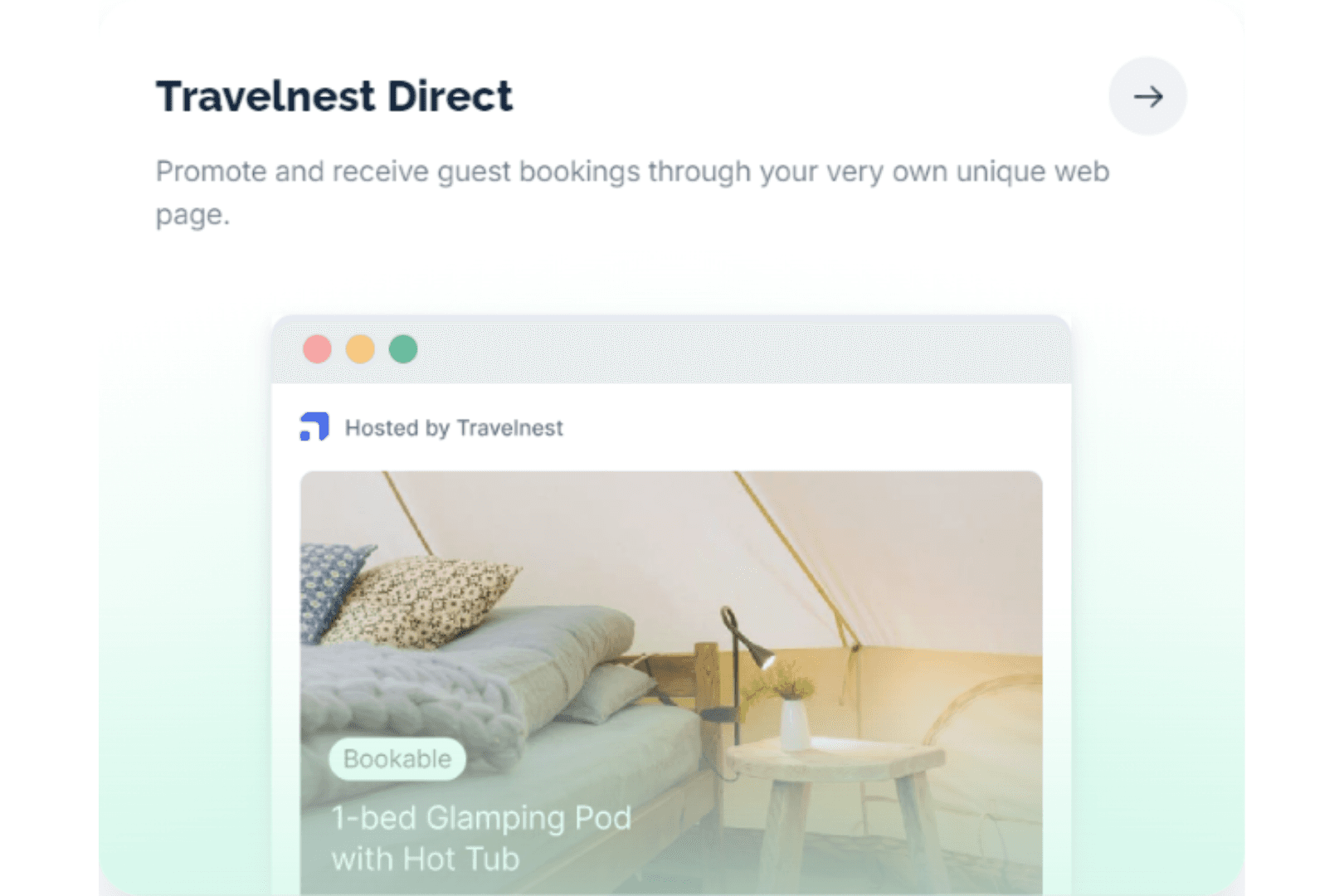
With Travelnest, your direct booking page is built for you automatically - there is no separate website to set up, no domain to purchase, and no monthly subscription on top. You simply pay a 5% commission on direct bookings, with nothing else added.
For a property earning £24,700 per year, that works out at £1,235 in annual fees - compared with £3,700-£6,000 in OTA commission on the same revenue. And because there is no subscription to justify, it costs you nothing unless you are actually receiving bookings.
How to set up a direct booking site with Travelnest
Travelnest makes it straightforward to start taking direct bookings alongside your existing OTA listings. Here is how to get started.
Create your Travelnest account. Visit travelnest.com and sign up. You can import your existing listing details, photos, and calendar to get started quickly.
Set up your direct booking page. Travelnest builds you a professional, bookable listing page under your own property name. This works as your direct booking destination and can be shared with past guests, linked from social media, and promoted via email.
Set your pricing. Use Travelnest's pricing tools to set your rates. Because direct bookings carry only a 5% Travelnest fee rather than a 15-20% OTA commission, you can offer a small direct discount to incentivise guests to book with you and still earn more per booking.
Share your direct booking link. Every time a guest checks out, send them a follow-up message with a link to your Travelnest page for their next stay. Returning guests who book directly are among the most valuable bookings you can get.
Let your Travelnest property expert help. The Travelnest team includes dedicated property experts who work with you on your listing quality, pricing strategy, and channel mix. If you are unsure how to present your property to attract more direct traffic, or how to promote your direct booking page effectively, your property expert can help you think it through.
Other ways to reduce your OTA dependency
Beyond setting up a direct booking website, there are a few other practical steps worth taking:
Encourage guests to save your contact details. Without violating OTA messaging policies, you can let guests know about your direct booking option at or after checkout.
Build a simple email list. Past guests who enjoyed their stay are your most likely future customers. A simple newsletter or seasonal offer sent directly to them costs almost nothing and can generate repeat bookings year after year.
Use social media to showcase your property. Platforms like Instagram and Facebook are free to use and give you a way to reach potential guests without paying a listing fee. Even a modest following can drive meaningful direct enquiries over time.
Add your property to Google. Setting up a Google Business Profile for your holiday let means guests searching for accommodation in your area may find you directly, before they reach an OTA listing.
Review your OTA programme participation. If you are enrolled in Preferred Partner or Genius programmes on Booking.com, it is worth reviewing whether the additional commission cost is genuinely delivering a return. In some cases, stepping back from these programmes and reinvesting the savings into your own direct marketing is a better use of money.
Frequently asked questions
Can I list on Airbnb and still take direct bookings? Yes. Most hosts use OTAs for visibility while building up their direct booking base. The two approaches complement each other. Using a holiday rental software platform like Travelnest keeps your calendar in sync across all platforms, so there is no risk of double bookings.
Will Airbnb or Booking.com penalise me for having a direct booking website? No. There is no rule preventing you from having your own website. Booking.com previously had price parity clauses that prevented hosts from advertising lower prices on their own site, but wide parity restrictions are now considered to restrict competition under UK law, so most hosts are free to offer a direct booking discount.
How much can I realistically save by taking direct bookings? On a property earning £24,700 per year, replacing 30-50% of your OTA bookings with direct bookings via Travelnest (at 5% versus 15-20% on an OTA) could save £750–£1,300 per year in commission. The exact figure depends on your current channel mix and the commission rates you pay.
Do I need technical skills to set up a direct booking website? Not with a platform like Travelnest. It’s designed for holiday let owners rather than developers, and the setup process is guided and simple. Travelnest's property experts can also support you through the process if you want hands-on help.
What is the fastest way to start getting direct bookings? The quickest win is almost always your existing guests. A simple follow-up message after checkout letting guests know they can book directly for their next stay, along with a link to your booking page, is low effort and often surprisingly effective.
If you want to explore how Travelnest can help you reduce your OTA costs and start building a more profitable direct booking channel, get in touch with our team or create a free account to get started.